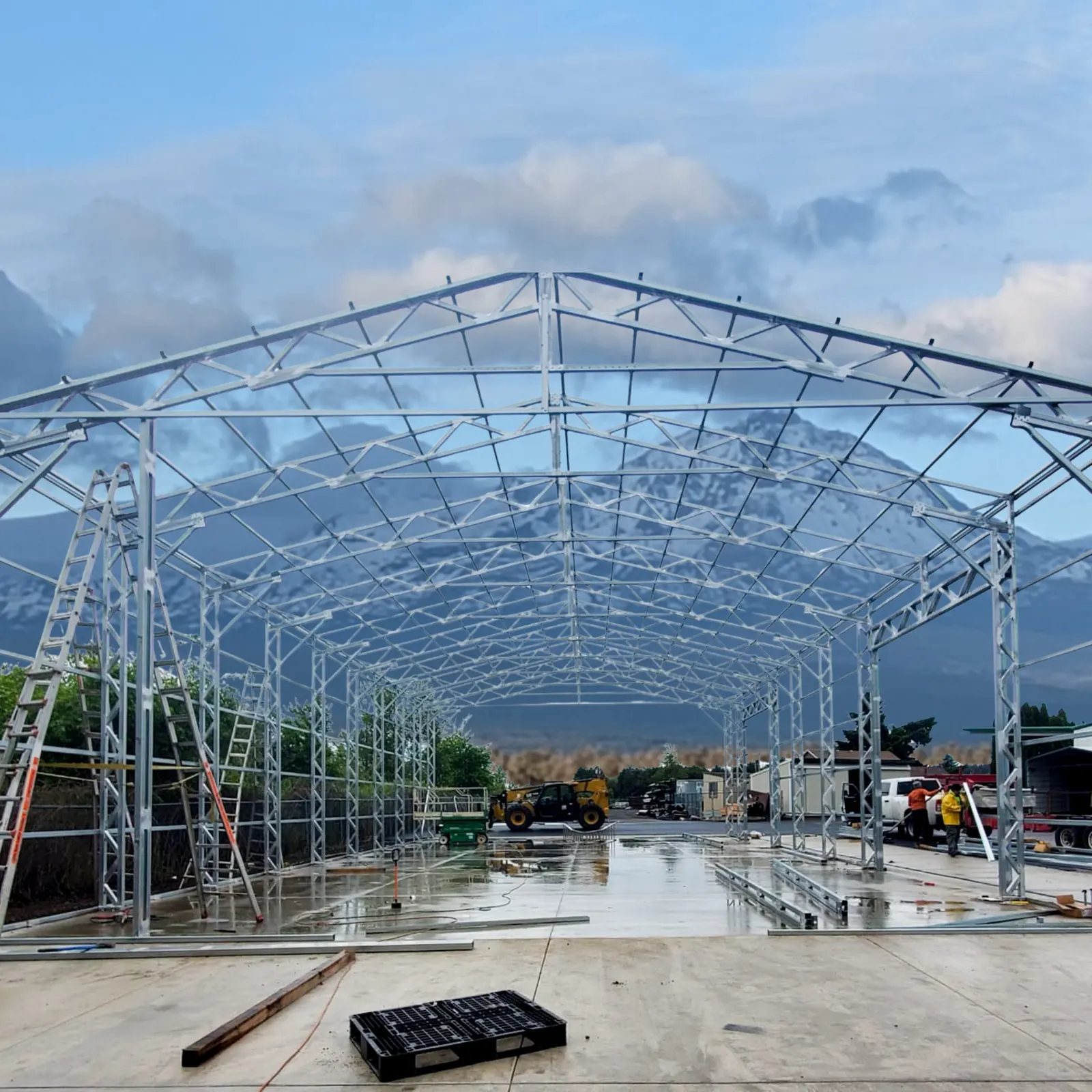
I have stood on a lot of install sites, from Prineville to Boise, and the same thing is true on nearly every one: the day goes well or badly based on what happened the week before the crew pulled in. The steel part is the easy part. Here is what a metal building install day looks like, and what you can do to keep it moving.
Before the truck shows up
The crew needs three things from you: a level pad, clear access, and the right to be there. Level means the ground or slab is ready to the tolerance on your install sheet, not "close." Access means a truck with a long trailer can get to the pad, and the crew can drop material near it. If you are on a rural lot outside Prineville or out past Sisters, check the driveway for soft shoulders, low branches and tight gates. A delivery truck that can't turn around becomes a long day.
Walk the site and stake the corners. Know where your utilities are, and call 811 before any anchors go in the ground. Have the permit in hand if your county requires one. Crews do not start a building without it.
I covered how to build the pad in concrete slab or gravel pad.
The order of work
A fully enclosed metal building, meaning a metal garage or shop with sides and ends closed in, goes up in a set order:
- Layout and base rails. The crew squares the footprint, checks diagonals, and sets the base rails to the pad. If the pad is out of square, this is where it shows up.
- Anchors. On concrete, anchors go into the slab. On dirt or gravel, ground anchors or a different base setup is used. Anchoring is the part that keeps the building on the ground in a windstorm, so crews don't rush it.
- Frame. The trusses or frame legs go up, then the bracing. On a bigger shop you will see the truss frame standing before any steel panels go on. It looks like a skeleton for a while, and that is normal.
- Roof panels. Panels go on and are screwed down. On a vertical roof the panels run ridge to eave, which sheds snow and pine needles better than panels that run across the slope.
- Walls, endwalls and gables. Wall panels, then trim.
- Doors and windows. Roll-up doors, the walk-in door and any windows are framed and set last, so the openings are square before the hardware goes in.
A small garage can go up in a day. A large shop with several roll-up doors and windows often takes longer, so ask for crew time when you book.
Weather is part of the plan
In Central Oregon, a clear morning can turn to wind by 1 PM. High wind and steel panels do not mix, because a panel catches wind like a sail. If the crew stops, they are protecting the building and themselves. Wet or frozen ground can also stop an install, especially if equipment has to cross a soft yard. In the Willamette Valley or western Washington, rain delays are more about mud and access than about the steel.
In winter, snow on the pad has to be cleared before the crew starts. If you are out near Prineville or up near the passes, plan for that.
What I tell people most often
Be there at the start, or have someone there. The crew will have questions about where the doors go, which side the roll-up door opens, and where the walk-in door sits. Those decisions are on the order, but a person on site can settle any doubt in thirty seconds.
Don't park on the pad. Move vehicles, firewood, and equipment before the crew arrives.
Keep pets and kids away. Sheet steel edges are sharp.
Check the building when it's done. Walk it with the crew lead. Look at the door operation, the trim, the screws and the base anchors. If something looks off, say so while the crew is still there.
What does not happen on install day
The crew does not pour concrete, run power, or insulate. Electrical goes through a licensed electrician, and insulation comes after the shell is up.
Certified buildings and inspections
If your building is certified (engineered for a specific snow load and wind rating), the inspector may want to see the anchors and base before the panels cover them. Ask your county building office when they want to inspect. In Oregon that is usually your county planning or building department, in Washington the county or city building department, and in Idaho your county or city. Call before the day, not during it.
Get the pad right, clear the access, and ask the crew lead your questions early.