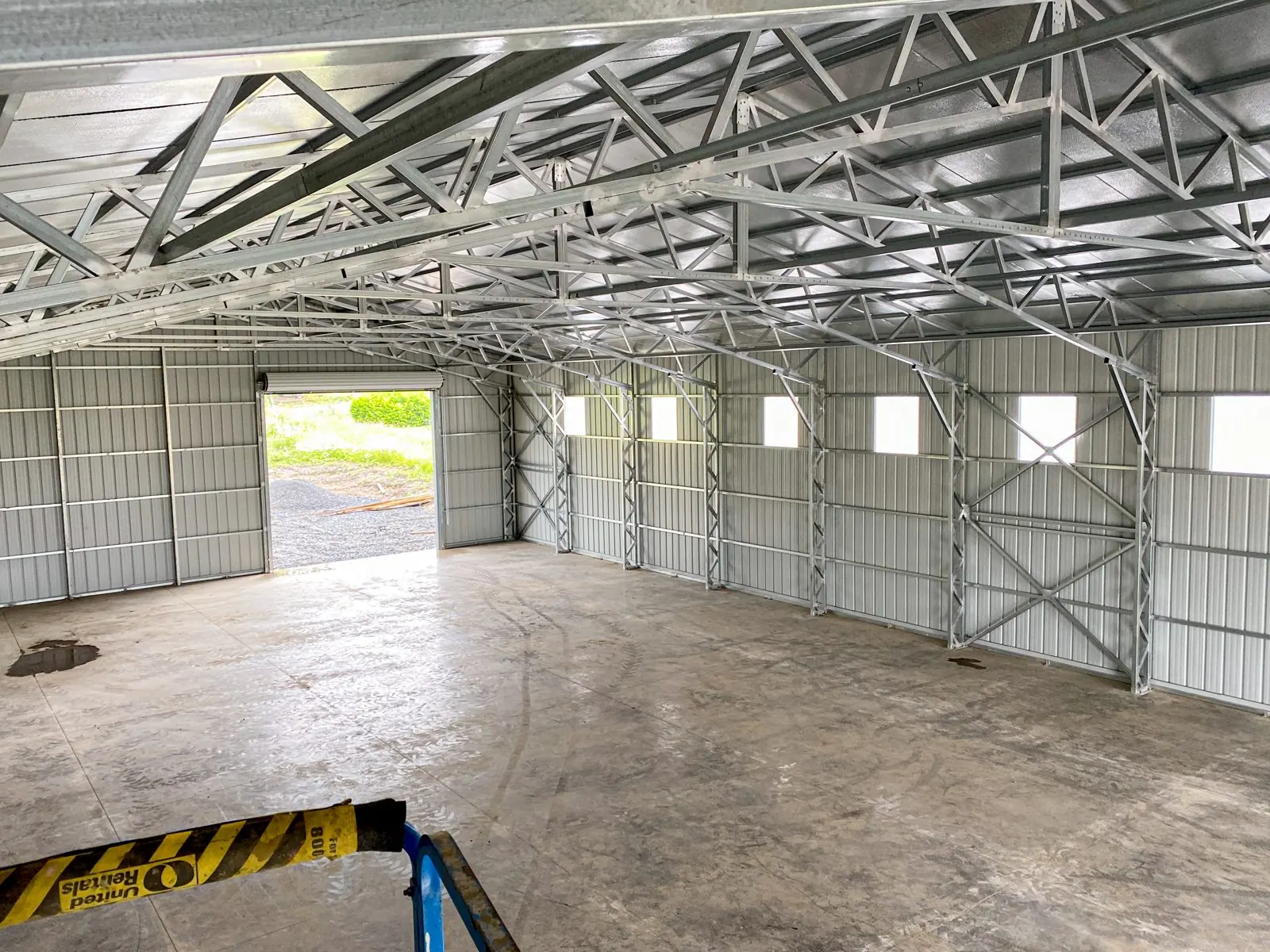
Here is the thing most people don't know about insulating a metal building: the main reason to do it isn't staying warm. It's keeping the roof from raining on your tools.
I get the call every fall. Someone has a metal shop or garage in Bend, Redmond, Boise or Spokane, and on the first cold morning there are drops of water on the inside of the roof panels and a wet spot on the floor. The building isn't leaking. It's condensation.
Why a steel shop drips
Steel is thin and it moves heat fast. On a clear Central Oregon night the roof panels get colder than the air inside the building. Warm air in the shop holds moisture from your breath, a wet truck, a damp slab, a propane heater. When that air touches cold steel, the moisture turns to water. Same thing happens on a cold glass of water in summer.
Eastern Oregon, the Treasure Valley in Idaho and the Inland Northwest have big swings between day and night, so it shows up there too.
What insulation actually does
Insulation on the underside of the roof and walls keeps the inside surface of the steel from getting cold enough to collect water. It has to be a continuous layer with a vapor barrier. If there are gaps, warm moist air finds them and the water forms behind the insulation, where you can't see it.
The common options for a metal garage or shop:
- Fiberglass blanket with a vapor-barrier facing. Rolled across the framing before the panels go on. Works well when the seams are taped and sealed.
- Rigid foam board in the walls. Good for the lower sections of sidewalls and endwalls, where you want something tougher than a blanket.
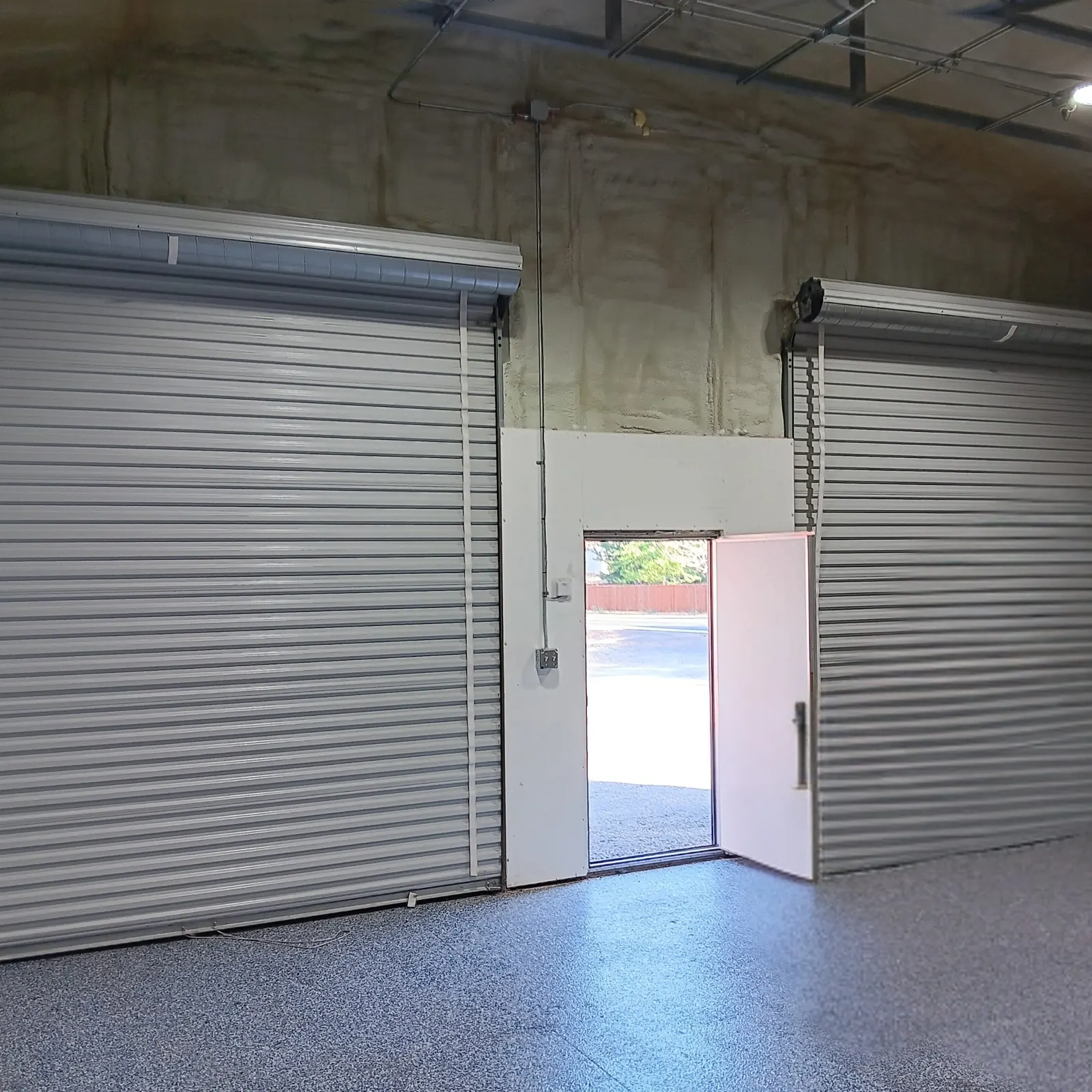
- Spray foam. Seals gaps and sticks right to the steel. It's a job for a specialty crew, done after the building is up.
A woodworking shop heated all winter needs more than a storage building you only open on weekends.
Decide before the building goes up
Insulation is much easier when the shop is being built, and some choices change what you order:
- Ceiling height. A blanket and a finished liner take up room. If you want a vehicle lift or tall roll-up doors, plan the height around the insulation.
- Roll-up doors. Insulated roll-up doors cut heat loss compared with a bare single-skin door. The big doors are usually the biggest air leak in the building.
- Walk-in door and windows. Seals matter here. A worn sweep or loose weatherstripping lets in cold air and damp.
- Vents. A closed-up, insulated shop still needs some ventilation. Gable or ridge vents let moisture out instead of leaving it to settle on the steel. In wildfire country, cover them with fine metal mesh.
Watch the slab
Concrete holds a surprising amount of moisture, especially in the first months after the pour. Insulate the walls and roof, then park a wet truck on a slab that's still curing, and you've built a very good humidity trap. Let the concrete cure, run a fan on dry days, and put a vapor barrier under the slab when it's poured. On a gravel pad, drainage around the building matters for the same reason.
Heating and moisture
Unvented propane or kerosene heaters put a lot of water into the air. Use one and you'll get condensation even with good insulation. A vented heater or a mini-split avoids it.
Check the permit side
Insulating and heating a fully enclosed building can bring in energy code questions. Deschutes, Crook and Jefferson counties in Oregon, Spokane County in Washington and Ada County in Idaho each handle it a little differently, and some rural lots don't require anything extra. Call the building department with the specifics: how many roll-up doors, whether there's a walk-in door and windows, and whether it will be heated. It takes ten minutes and saves you a surprise.
What I tell people
If you'll work in the shop, insulate it and seal it. If it's storage for a tractor or a boat, you can often skip full insulation, but ventilation and a vapor barrier under the slab still matter. And don't caulk the panels hoping the drips will stop. The water is coming from the inside.