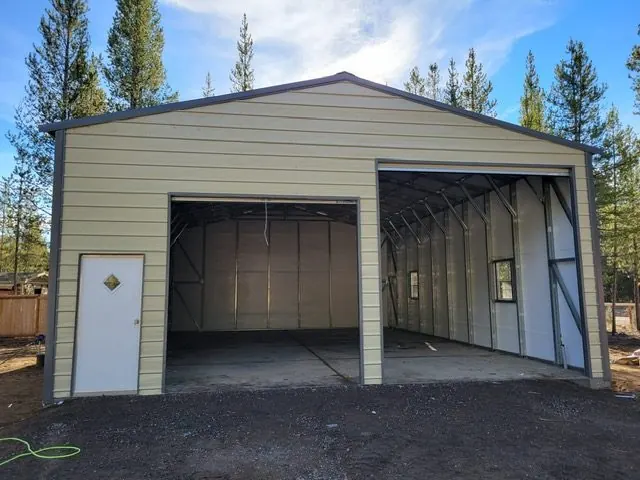
Most people ordering a metal garage or shop think about windows last. I think they should come up much earlier, because where you put them decides how you will use the building every day.
A metal garage or shop is fully enclosed, sides and ends. That means everything that lets in light or lets you in and out is an option you choose: roll-up doors, a walk-in door, and windows. Get the mix right and the building is pleasant to work in. Get it wrong and you spend winter with the overhead lights on at noon.
The thing most buyers don't know
Windows don't have to go on the same wall as your roll-up doors, and usually they shouldn't. When a roll-up door is open, you get light and air through that opening. When it is closed, you get nothing. The wall that does the most work for you is the one that never opens: a long sidewall.
Windows on a sidewall give you steady daylight no matter what the roll-up doors are doing. If you are working on a truck with the doors shut because it is 20 degrees out in Bend, those side windows may be the only daylight you get.
Think about the sun and the weather
In Central Oregon, winter days are short and the sun sits low. A window on the south side of a shop in Redmond or Prineville brings in real light and a little free warmth on a clear January afternoon. The same window in July can turn a closed shop into an oven. Plan for both.
West of the Cascades, in places like Eugene or Tacoma, it is gray for months, and a shop with no windows feels like a cave. In southern Idaho, around Boise and Twin Falls, the summer sun is hard, so think about where it will land on your workbench.
Walk-in door first, then windows
If you only add one option beyond the roll-up doors, make it the walk-in door. Opening a big roll-up door every time you need a tool is a waste, and it lets your heat out in winter. A walk-in door gets you in and out without any of that.
Put the walk-in door where you will actually walk. Look at where your house, driveway or parking area is and put the door on the closest wall. A door on the far side from the house means a long walk in the rain every day.
Then add windows. A couple on a sidewall near your work area is usually plenty. You don't need a wall of glass.
Security and privacy
Windows also let people see what is inside. If you keep tools, a side-by-side or a trailer in there, think about who can see in from the road. Placing windows higher on the wall, or on the side facing your house instead of the road, keeps the light and keeps your stuff less visible.
This matters most on rural properties around Madras, Sisters and out past La Pine, where a shop may sit a long way from the neighbors.
Windows and insulation
Glass loses heat much faster than an insulated wall. If you want a heated shop for winter work, keep the window count modest. Also, condensation shows up on cold glass first. It is not a leak. It is the coldest surface telling you the air inside is humid.
Snow and wind
A window on a sidewall is protected by the eave from most rain and snow. That is another reason sidewalls are a good home for windows. A window near the ground can get buried if snow slides off the roof and piles up beside the building, so in snow country think about where the snow will land before you pick locations.
In high-wind areas like the Columbia Gorge or parts of eastern Washington, ask how windows are installed on the building. Your building should be certified for the wind and snow at your address. Snow load depends on the exact address, so ask your county building office what your site needs. Certified buildings are rated for 40, 50, 60 or 80 psf snow load.
A quick checklist
Walk your site and ask: which wall will I stand next to most (windows there), where is the closest path from the house (walk-in door there), where does winter and summer sun land, and who can see in from the road?
The photo at the top shows a metal garage with roll-up doors, a walk-in door and windows on the long side, away from the roll-up doors. That is the layout I would pick for most shops.
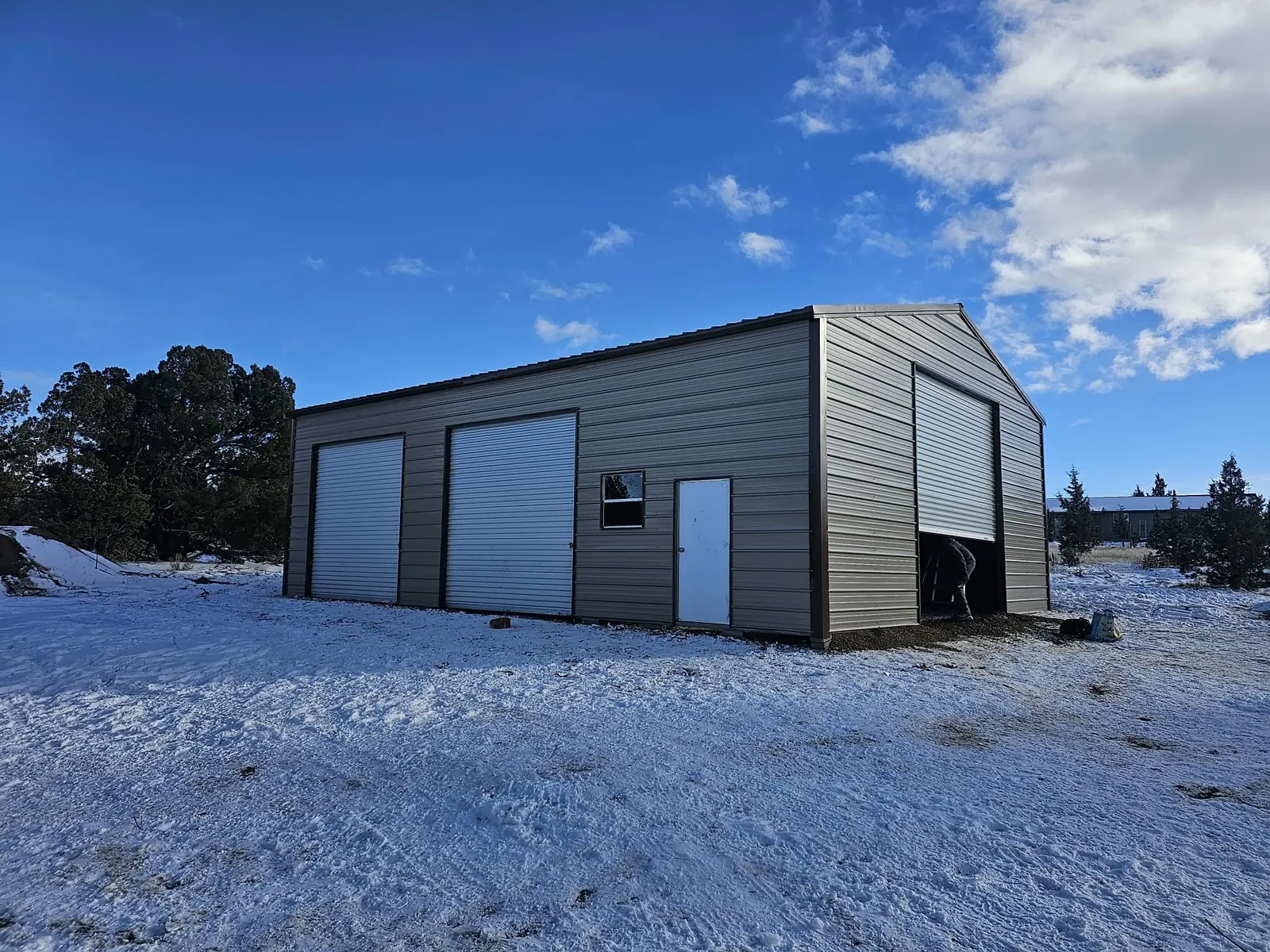
This one is in snow, and you can see how a sidewall window under the eave stays clear of it.
If you are near Madras or anywhere else in Oregon, Washington or Idaho, the same layout thinking applies. Decide on windows and doors before the building is ordered, not after. Ten minutes of planning now beats years of wishing a window was somewhere else.