Most people think there are two choices: an open carport or a closed garage. There's a lot of ground in between, and for many properties in Oregon, Washington and Idaho that middle ground is the right answer.
A partially enclosed carport is an open structure with some options added. Before you pick, it helps to know what each option is and what it actually does.
First, what counts as open
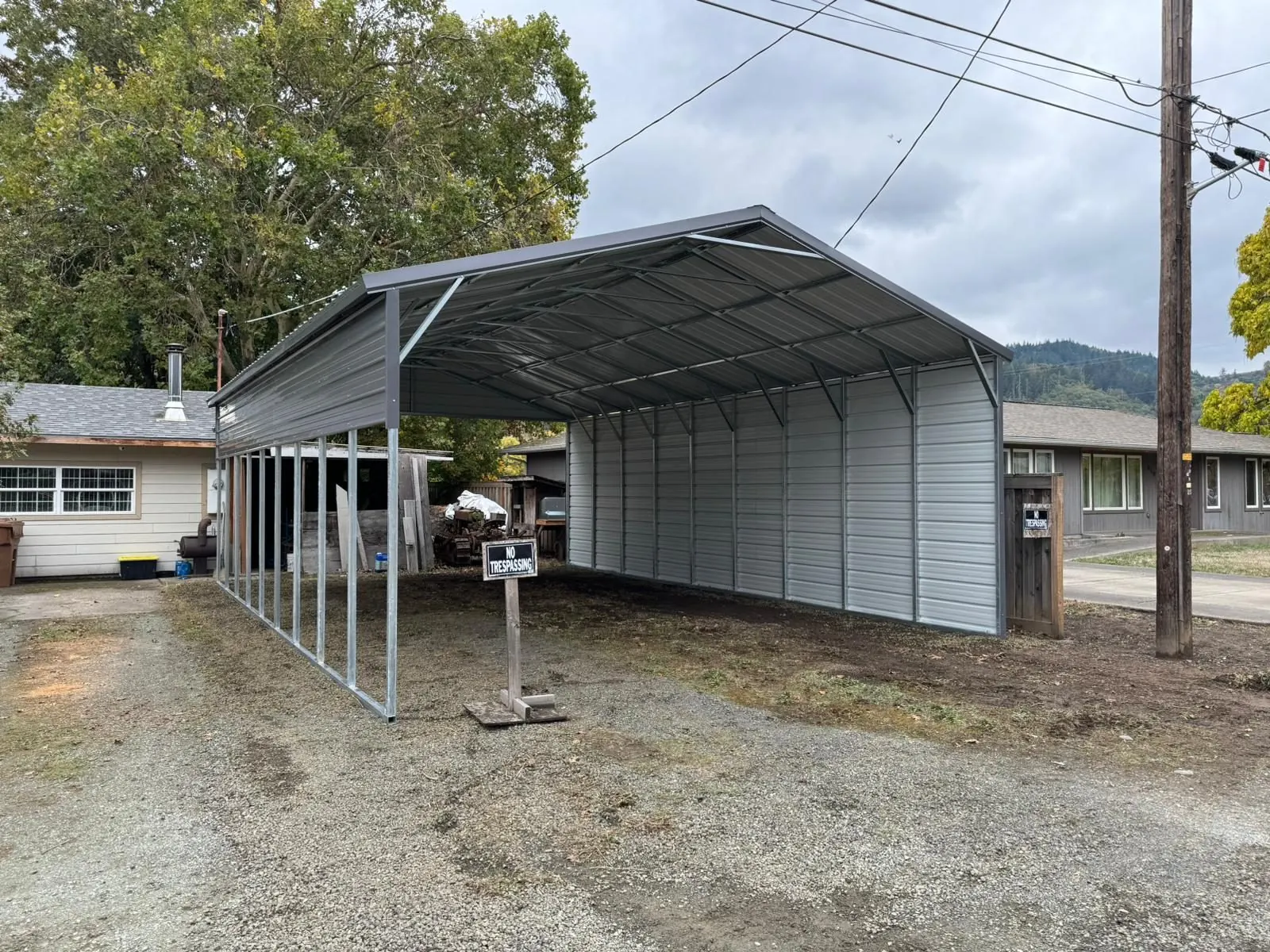
A standard metal carport has gables on the ends, the triangle at the top of each end, and often one short side panel on each side, about 3 feet down from the eaves. That short panel is there for shear strength, so the frame holds up in wind. It does not make the carport enclosed. You still have an open structure you can drive straight through.
The options, one at a time
Full sidewalls. A sidewall runs from the roof down to the ground along the length of the carport. One sidewall on the windward side is the most popular upgrade I see. In Central Oregon and the Columbia Gorge, wind usually comes from one direction, and a single wall takes the sting out of it for the truck, boat or equipment underneath. Two sidewalls give you a tunnel with open ends.
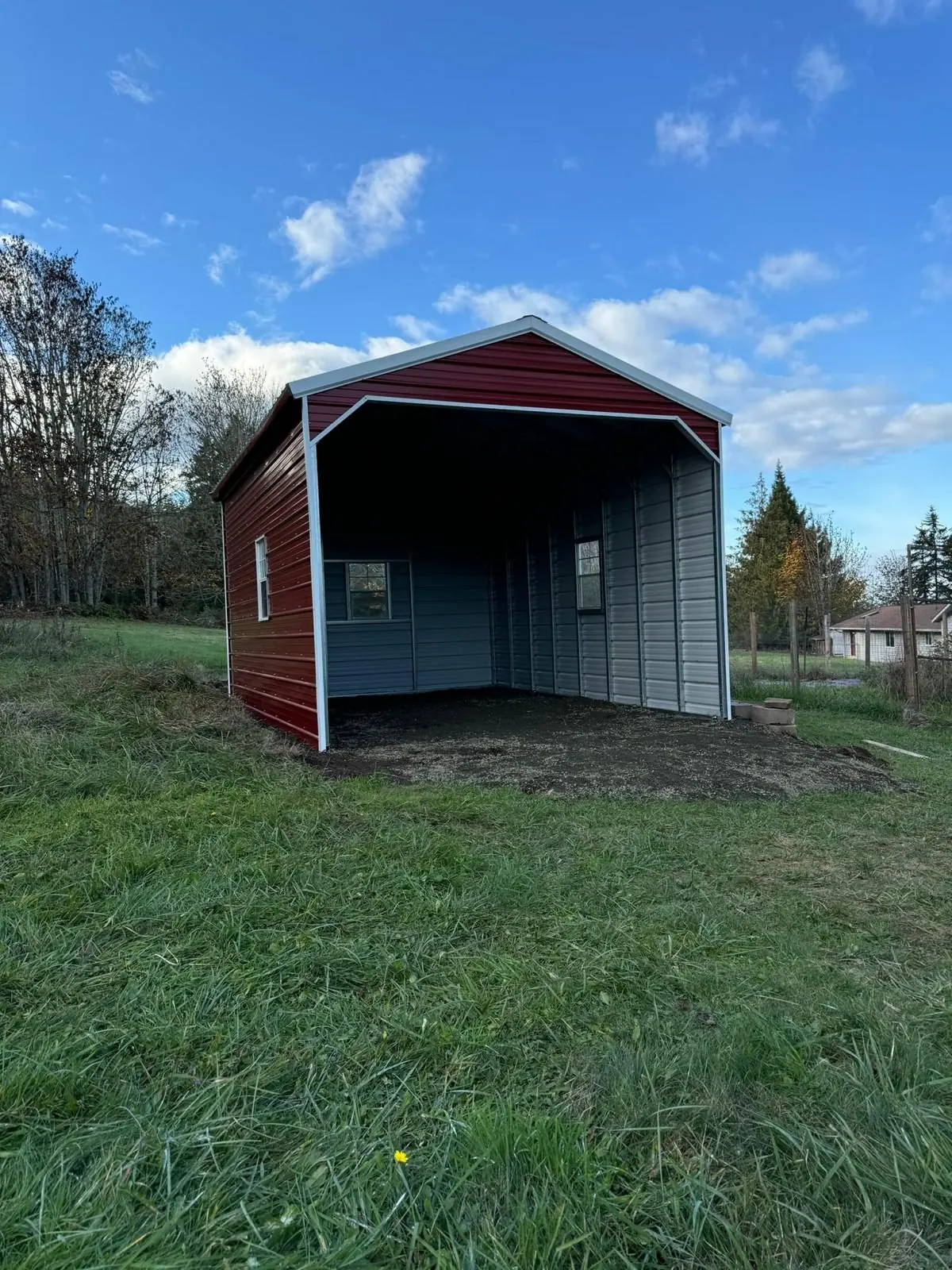
Endwalls. An endwall closes in the front or back. With a gable above and an endwall below, one end is fully shut. A carport with one sidewall and one endwall gives you a corner of shelter, and it keeps rain and snow from blowing in on the back of whatever you're parking.
Extra side panels. Taller or additional side panels partway down the side give you some wind and splash protection while leaving air flow. They suit properties where you want shade and some cover without losing the open feel.
Gables. Closing the triangle on the ends keeps snow and rain from blowing up under the roof. For a carport in the snow belt, such as Sisters, Bend or the Idaho high country, gables matter more than most people expect.
Why bother: weather you actually get
- Wind. Open-sided carports let wind blow through, which is good for the structure, but not for what's parked under it. Spokane and Eastern Washington get gusts that carry dust and grit. A sidewall on that side helps.
- Snow. Drifting snow comes in sideways. A sidewall and a gable stop it from piling up inside, and an A-frame vertical roof sheds the snow off the top. Ask us about the snow load rating for your elevation before you decide.
- Sun and UV. In Redmond, Prineville or Boise, summer sun can fade paint and bake a dashboard. A west-facing sidewall puts shade where you need it.
- Rain. West of the Cascades, in places like Eugene, Salem or Vancouver, Washington, wind-driven rain gets under open carports. Sidewalls on the weather side keep the floor dry.
When it becomes a garage
Once you close in the sides and both ends, you're no longer talking about a carport. That's a metal garage or shop, with roll-up doors, a walk-in door and windows, and it gets treated differently for permits and inspections. Fully enclosed buildings often draw more scrutiny from the county, and they may need things an open structure doesn't, such as an engineered foundation or an energy code review.
So when you describe what you want to your county or city planning office, be specific: say "carport with one sidewall and gables" or "carport with two sidewalls and one endwall." Don't just say "enclosed." A vague word can push your project into a more complicated permit.
HOAs and setbacks
If you live in a neighborhood with an HOA, in Bend, Redmond or elsewhere, check the rules before you pick walls. Some HOAs allow an open carport but not a fully closed building. Others have rules about how many sides can be closed. Call the board with the specifics.
A quick way to decide
- Note which direction the wind and weather come from on your property.
- Decide what you're protecting: a daily driver, an RV, equipment, firewood.
- Start with one sidewall on the weather side. It's the best value in protection per foot.
- Add an endwall if the wind comes from the front or back.
- Keep the other sides open if you want to drive through or have easy access.
You can add walls later in many cases, but it's easier and cleaner to plan for them from the start so the frame and anchoring are sized right.
One thing to remember
Open doesn't mean unprotected, and closed doesn't mean better. The best partially enclosed carport is the one with the walls where your weather actually comes from.