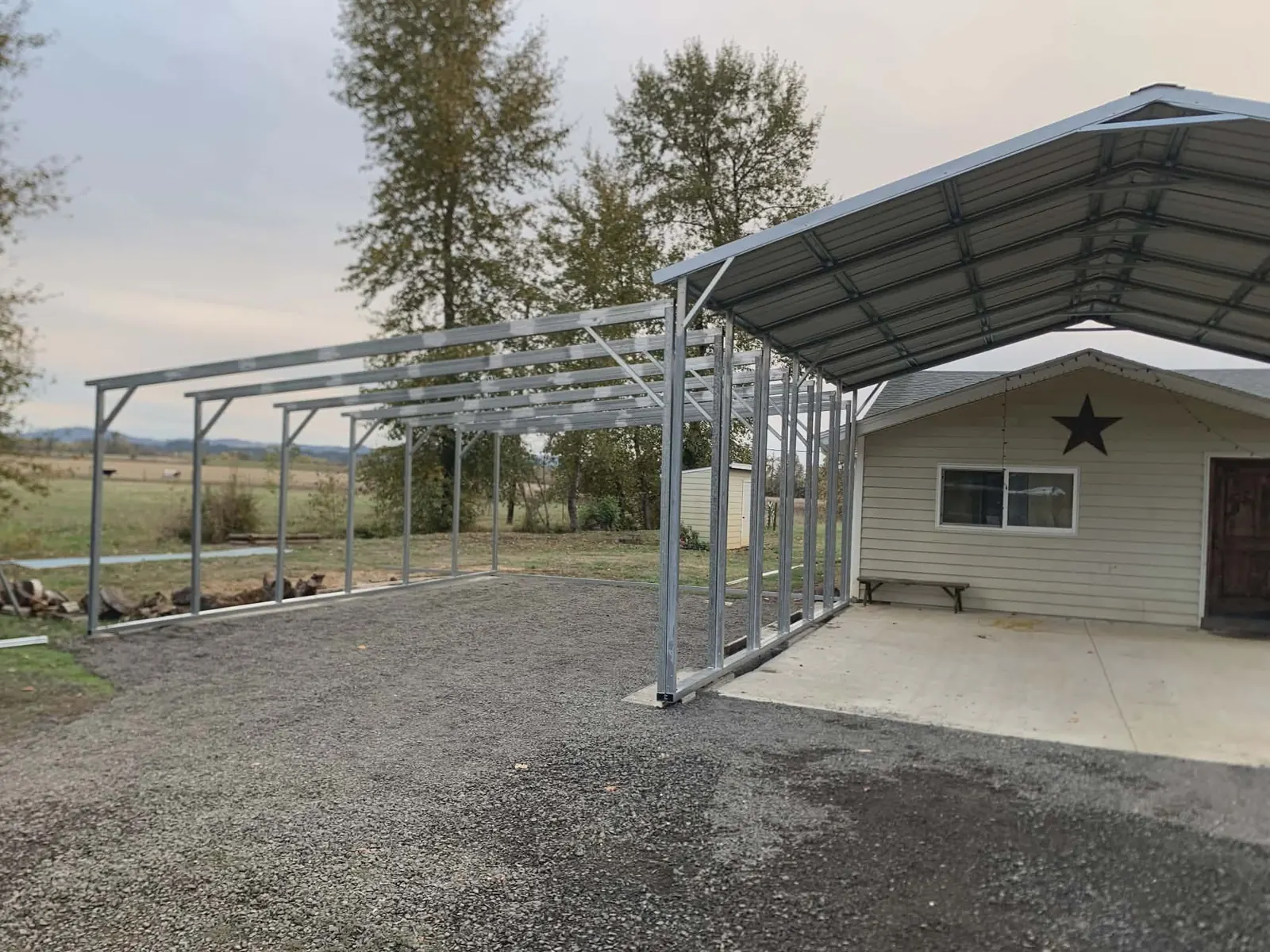
People shop carports by size and color. Almost nobody asks how it stays on the ground, and that's the part that matters the first time a big wind comes through the Columbia Gorge or across the high desert near Redmond. A metal carport is a big, light roof. Wind wants to lift it. The anchors are what say no.
What most buyers don't know
The anchor type depends on what is under the legs, and the right choice is not the same on dirt as on concrete. A kit of anchors that holds well in a slab can be the wrong thing in loose soil, and the other way around. Tell us what your ground really is, not what you hope it is.
Anchoring on dirt
On bare ground the legs are held by anchors driven into the soil. That works, but it depends on the soil:
- Firm, compacted dirt holds anchors well.
- Loose fill, sand or soft, wet ground holds less. In those spots the crew may recommend a different anchor style, or a pad or concrete footings.
- Rocky ground, common around Bend and Prineville, can stop a standard anchor short. Hitting lava rock isn't a surprise out here, and it's worth mentioning when you order.
Dirt is also where drainage matters. If water sits under a leg all winter, the soil softens and the anchor loses grip. Grade your spot so water runs away from the carport.
Anchoring on gravel
A packed gravel pad is a good base for a carport, since it drains. But anchors still have to reach the ground below, so gravel depth matters. A thin layer over solid ground is different from a deep layer over fill. Let us know how thick your gravel is.
Anchoring on concrete
On a slab, anchors are fastened into the concrete itself. The details matter:
- The slab has to be thick enough and cured before anything gets bolted down.
- Anchors need distance from the slab edge. Too close to the edge and the concrete can crack out under load.
- A slab poured for a car may not be wide enough for the legs and the anchor spacing. Measure it against the carport's footprint, not just the overall size.
If you're pouring a slab for the carport, tell your concrete contractor the carport's dimensions and leg spacing before the pour. That one phone call saves a lot of trouble.
Wind and snow change the answer
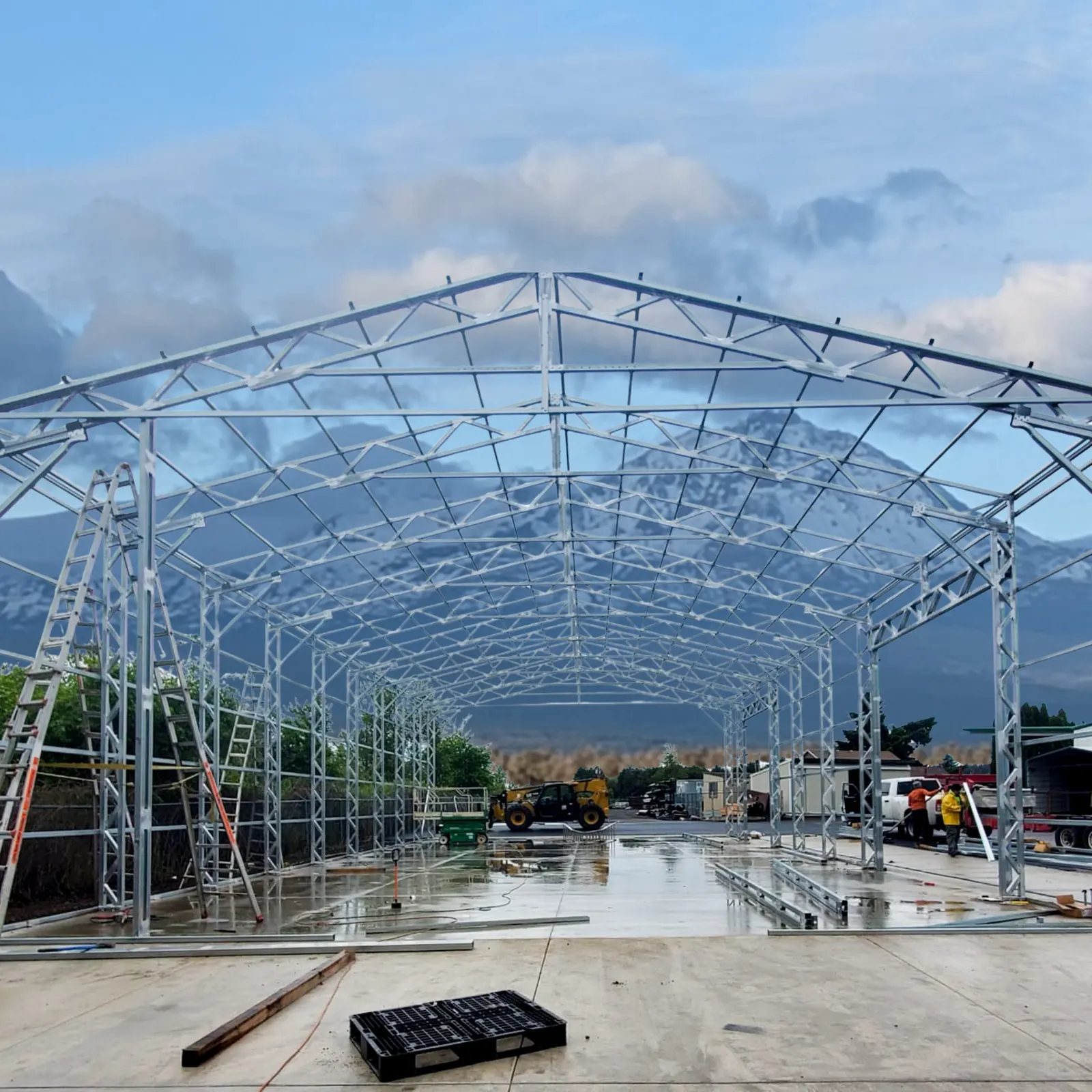
Wind and snow ratings go with the anchoring. A carport rated for heavier snow, like those we see in Sisters or up in the Washington Cascades, carries more weight down through the legs, and the base has to carry it. In windy country the anchors resist uplift. Your county can set the design numbers for your address, and the carport and its anchoring should match them. That's another reason to call the building department early.
Options change the load too
An open carport with gables and a short side panel on each side, about 3 feet down from the eaves, catches less wind than one with sidewalls or endwalls. If you're building a partially enclosed carport, say with one sidewall and gables, or with endwalls, you've added surface for the wind to push on. Tell us which options you want so the anchoring matches the finished carport and not just the bare frame.
Questions to answer before the crew shows up
- Is the spot dirt, gravel or concrete, and how thick is the gravel or slab?
- Does water pool there after rain or snowmelt?
- Is the ground rocky, soft or filled?
- Is the spot level, or does it slope?
- Are there buried lines (power, water, septic) where the legs will go? Call 811 before anyone drives an anchor.
What I'd do
If you have a good level slab, you're in great shape: just make sure it's cured and big enough. If you have dirt, take a shovel and look at what's under the surface before you order. Five minutes of digging tells you more than any guess. Then give us the real answer, and the carport gets anchored for the ground it's actually sitting on.