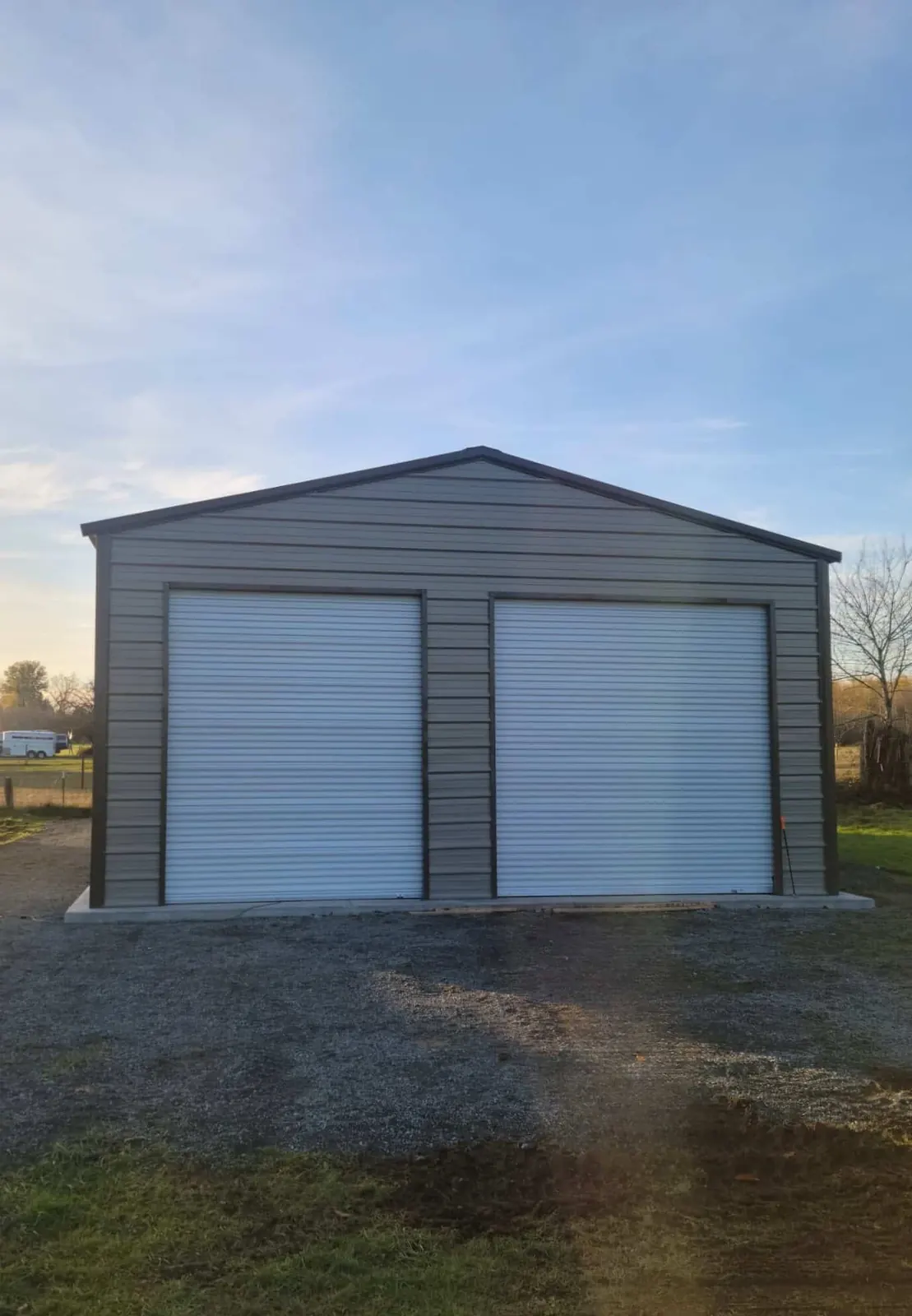
A steel shop has a head start in wildfire country, because the walls and roof don't burn. But a building can still be lost from the inside out, or from what's piled along its walls. Most of the fixes are cheap, and you can do the most important ones in an afternoon.
Think of it in three parts: the openings, what's inside, and the ground right around the building.
The openings: where embers get in
Embers are small and the wind pushes them into anything with a gap. On a steel building, the usual weak spots are:
- Under roll-up doors. If daylight shows under a closed door, embers can blow under it. Check the bottom seal and replace it if it's torn or flattened.
- Walk-in doors. Weatherstripping around the frame and a sweep on the bottom keep out sparks as well as drafts.
- Vents. Any vent that lets air in will let embers in. Cover vents with fine metal mesh; 1/8 inch or smaller is the common recommendation. Plastic screens melt, so use metal.
- Trim and closures. Look for gaps where the wall panels meet the roof and where they meet the slab. Closure strips and tight trim leave embers fewer places to get through.
- Doors left open. The simplest one. On red flag days, and any time there's fire nearby, keep the shop closed up.
Walk around your building on a sunny day with the doors shut and the lights off inside. Every spot of daylight you see is a way in for an ember.
What's inside: keep the fuel off the walls
Steel conducts heat, and embers that do get in land on whatever is near the doors. So where you store things matters as much as what you store.
- Hay and straw catch from a single ember. If you store hay in a steel building, keep it away from the doors and vents, and keep the floor around it swept.
- Fuel, oil, paint and propane. Store them in a proper cabinet or away from the walls, not stacked by the roll-up door.
- Rags, cardboard and sawdust. Shop clutter is kindling. Clean it up before fire season, not during it.
- Vehicles and equipment. Anything with a fuel tank is a fire load. If you can, park it away from the walls.
The 5 feet around the slab
Fire people call the first 5 feet around a building the most important ground on the property, sometimes called Zone 0. Embers pile up along the base of walls, and if there's something there to catch, flame sits right against the building and the door seals.
For a steel shop on a slab:
- Use gravel, concrete or bare soil in the first 5 feet. No bark mulch, no dry grass, no weeds.
- Nothing stacked against the walls. Firewood, pallets, lumber, old tires and spare panels go somewhere else, ideally 30 feet or more away.
- No wood add-ons tied to the building. A wood lean-to, deck or fence attached to the wall is a fuse leading straight to it. If you need a cover off the side, a steel lean-to keeps the whole building non-combustible.
- Rake it out. Pine needles blow in and collect along the walls and in the corners. Clean them out through the season, not just once in spring.
- Gutters and roof. If the building has gutters, keep them clear. An A-frame vertical roof (vertical panels, ridge to eave) sheds needles on its own, but check the eaves anyway.
Beyond the first 5 feet
Out to about 30 feet, keep grass mowed short, limb up trees and don't let brush grow up against the building. Past that, thin it out so a fire on the ground can't climb into the trees. Your local fire district or county can walk your property and tell you what matters most where you are.
Planning a new building?
If you're starting from scratch, you can design for most of this up front: put the building where you can keep the ground clear all the way around, pour a slab with room for a gravel strip, choose doors that close tight, and plan a steel lean-to instead of a wood one. Lay it out in the 3D designer, or send us your site details and we'll help you work it out.