Every metal building we sell in Oregon, Washington and Idaho comes with a snow load rating. You'll see numbers like 40, 60 or 90. That number is how many pounds of snow every square foot of roof is built to carry. It's one of the most important lines on the order, and it's the one people guess at most.
Here's the thing most buyers don't know: the number you need belongs to your address, not your town. Two neighbors a few miles apart can need different ratings, and the person who decides isn't us or you. It's your county building department.
Where the number comes from
Building departments work from something called the ground snow load: how much snow sits on flat, open ground at your site in a heavy winter, based on historical records. Engineers turn that into a roof design load, which is what your building has to be rated for.
Elevation drives most of it. Redmond and Madras sit lower and drier than Sunriver or La Pine. Sisters gets more snow than Terrebonne. Up north, a site outside Sandpoint or up a draw near Coeur d'Alene sees a different winter than a field near Spokane. Don't size your building on what your brother-in-law's place across the county needed.
The fix is a five-minute phone call before you order. Call the permit office that covers your property and ask: "What ground snow load and roof snow load do you require at this address?" Some offices to start with:
- Deschutes County Community Development for rural Bend, Sisters, Sunriver and La Pine. Properties inside city limits go through the city: City of Bend or City of Redmond building.
- Crook County Community Development in Prineville.
- Jefferson County in Madras.
- Spokane County Building and Planning on the Washington side.
- Kootenai County Community Development in Coeur d'Alene.
Write the answer down and give it to us. It goes straight onto your order and into your engineered drawings.
Why certified drawings matter here
A certified building comes with engineered drawings, stamped for a specific wind speed and snow load. When the county asks "what is this building rated for," those drawings are the answer. If the rating on paper is lower than what they require, the permit stops right there.
So the number on your drawings needs to meet or beat the county's number. Pick it before you pick colors.
What actually changes when the rating goes up
A higher snow rating isn't a sticker. The building gets physically stronger. The usual changes:
- Frames closer together. Trusses spaced tighter share the weight across more steel.
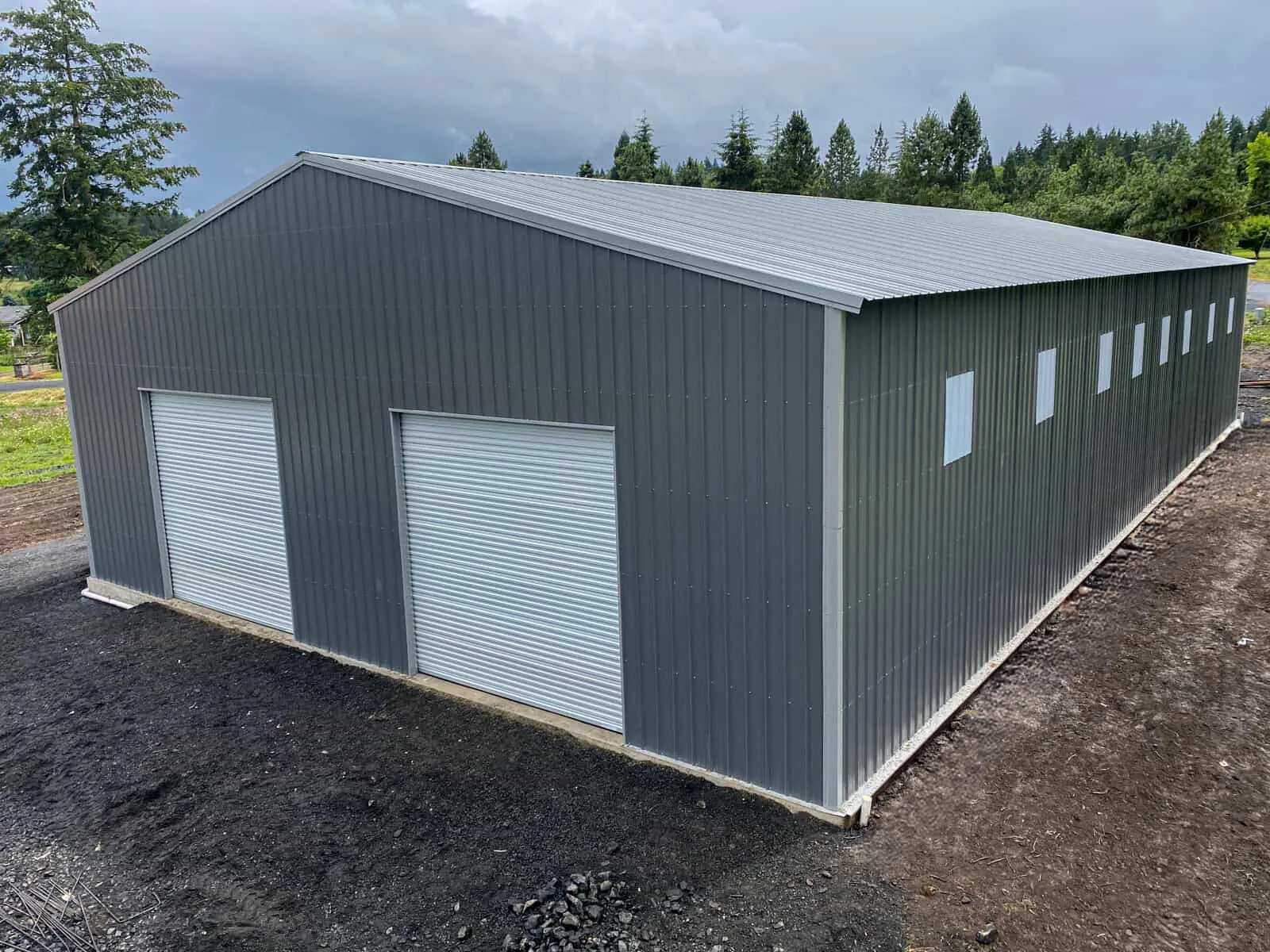
- An A-frame vertical roof. That's an A-frame with vertical panels running from the ridge down to the eave, so snow slides off instead of sitting in the ribs. In snow country it's the roof we steer people toward.
- Extra bracing at the corners and along the walls.
You don't have to work any of this out yourself. Tell us the load, and the building gets engineered to it.
The part the rating doesn't cover: snow coming from somewhere else
This is the one that catches people. A snow rating assumes snow falls on your roof. It doesn't assume extra snow sliding onto it.
Put a carport or lean-to right under the edge of your house roof, and every time the house sheds, a pile of wet, packed snow lands on your building all at once. Same thing with a low lean-to against a tall shop wall. Wind drifts snow into that corner and it stacks up deeper than anywhere else on the roof.
If your building will sit next to a taller roof, tell us before it's designed and mention it to the permit office. Sometimes the answer is to move the building a few feet. Sometimes it's a higher rating on the lower roof. Either is easier than finding out in February.
Wet snow is heavy snow
Central Oregon gets dry powder some years and wet Cascade snow others. A storm that drops heavy snow, then rains on it, makes the roof carry a lot more weight than the same depth of fluffy snow. That's exactly what your rating is built for, but it's also why the rating matters more than how deep the snow looks.
A few habits help any building:
- Keep the eaves clear so snow coming off the roof has somewhere to go.
- Use a roof rake from the ground after a big storm if snow starts to build up. Don't climb on a loaded roof.
- Keep the area along the walls clear so sliding snow doesn't pile up against the side panels.
The short version
- Call your county and get the snow load for your exact address.
- Make sure your certified drawings meet or beat it.
- Tell us if the building sits under or beside a taller roof.
- Choose an A-frame vertical roof if you're anywhere snow sticks around.
Do that, and the snow load line on your order stops being a guess.