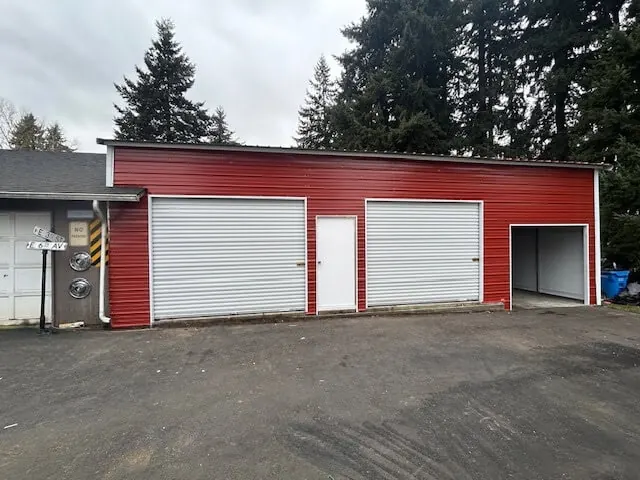
After a wildfire goes through the high desert, you'll often see a steel shop standing on a lot where the house and the wood barn are gone. That isn't luck. It's how most buildings catch fire, and what steel does about it.
How buildings actually catch
Most buildings lost in a wildfire aren't burned by a wall of flame rolling over them. They catch from embers. Burning bark, pine needles and bits of roofing ride the wind ahead of the fire, sometimes a mile or more, and land on roofs, in gutters, along walls and in corners where debris piles up. If an ember lands on something dry that will burn, that's where the fire starts.
A wood building gives embers a lot to work with: dry siding, open eaves, old shingles and gaps between boards. Every one of those is a place for a spark to sit and grow.
What steel does well
Steel roofing and siding don't burn. An ember that lands on a steel roof sits there and goes out. A spark that blows against a steel wall has nothing to catch. That takes away the main way fire gets into a building.
The panels also leave embers fewer places to settle. A steel roof doesn't have the cracks and edges that hold needles and sparks the way old shingles do. An A-frame vertical roof (vertical panels, ridge to eave) sheds pine needles and debris well, because the channels run straight downhill. Needles and leaves that don't pile up on the roof can't catch an ember.
The frame is steel too. There are no wood trusses or rafters under the roof waiting to catch from a spark that gets through a gap.
Where steel falls short
Steel is a big step up from wood, but "doesn't burn" isn't the same as "fireproof." Be honest with yourself about three things:
- Heat goes through it. Steel conducts heat. If a hay stack, woodpile or vehicle burns right against the wall, the heat comes through, and whatever is stored against the inside of that wall can catch.
- Steel gets weaker when it's hot. In a long, hot fire right against the building, the frame can lose strength and sag. That takes a lot of heat, which is why clearing the area around the building matters.
- The contents still burn. Embers can get in through open doors, gaps under roll-up doors, vents and openings in the trim. Once hay, cardboard, rags or fuel cans inside catch fire, the steel walls just hold the heat in.
In other words, the building is only one part of the job. The rest is what you keep in it and what you keep around it.
What to think about when you're planning
If wildfire is part of the reason you're looking at a steel building, a few decisions up front make a difference:
- Where it sits. Leave room around the building so you can keep the ground clear and park a truck or run a hose on every side. Don't tuck it into the trees if you can avoid it.
- Fewer gaps. Ask about trim, door seals and closures that leave embers fewer ways in. Roll-up doors and walk-in doors that close tight make a difference.
- The pad. A concrete slab with gravel around it gives fire nothing to creep in on at ground level.
- What goes inside. If it's for hay, fuel or equipment, plan where those things will sit, away from the walls and the doors.
We'll go through the doors, vents and the ground around the slab in more detail in a separate post.
The bottom line
A steel building won't make your property fireproof, and nothing replaces clearing brush, keeping up your defensible space and leaving when you're told to evacuate. But when it comes to the building itself, steel takes away the main thing a wildfire needs: something on the outside that burns. That's a real advantage, especially for a shop or barn out of sight of the house.
If you're planning a building, use the 3D designer to lay it out, or tell us about your site and we'll help you think it through.